Explore our programs and resources supporting seniors, individuals with disabilities, and caregivers.

Learn about transportation programs supporting regional planning, coordination, and mobility.

Explore our programs supporting regional planning, business growth, housing, and more.

Learn about community services programs that support veterans, individuals, and families through education, financial resources, and volunteerism.

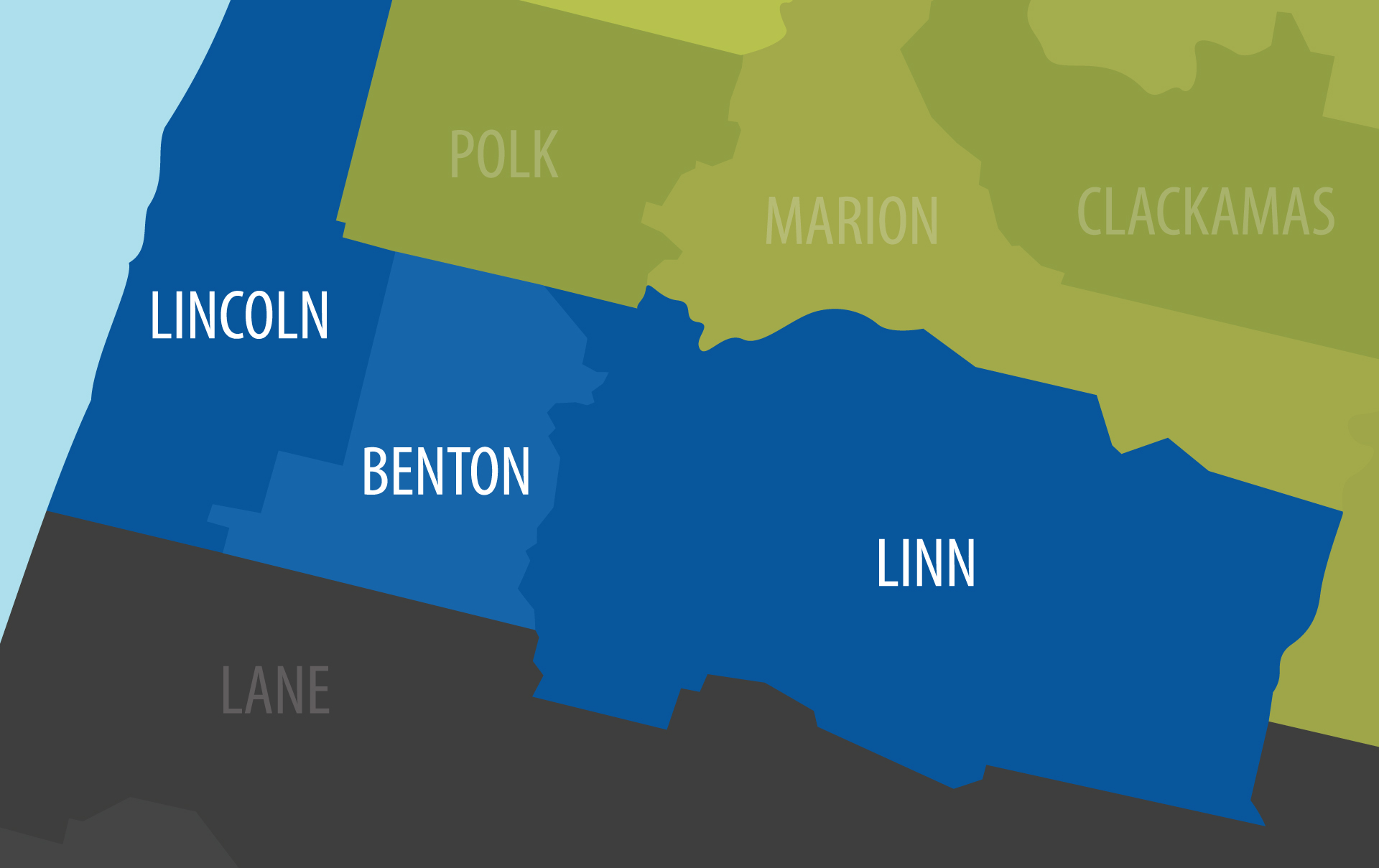
Our transportation projects and services improve the quality of life and safety in the communities in our region. We provide specialized services, grants, and expertise to transform and modernize regional transportation accessibility, planning, and more! Click on the map below to see some of our recent work.
Check out our community and economic development projects to see more real-world improvements happening across Linn, Benton, and Lincoln Counties.
If you’re exploring transit, mobility, or other transportation needs, use this form to reach our team. We’ll follow up to learn more and share next steps.
Transit Workforce Study, Benton, Lane, Linn and Marion Counties – 2024
In our community, buses are a vital part of daily life. They help people get to work, school, and other important places. However, many of our buses are facing a serious problem: there aren’t enough drivers to keep them running smoothly. To tackle this issue, the Oregon Cascades West Council of Governments partnered with the University of Oregon to study why this is happening and what we can do to fix it. The results were published in the Transit Workforce Study, which is designed to help local transit systems overcome these challenges.
Why Is There a Shortage of Bus Drivers?
The study found that the shortage of bus drivers isn’t just a problem locally —it’s happening across the entire country. Here are some key reasons why:
How Can We Fix This?
Based on these findings, Cascades West has proposed a few solutions to help bring more people into the transit workforce:
How You Can Help
The transit workforce shortage affects everyone who relies on buses to get around. By spreading the word about these opportunities and supporting efforts to make bus driving a more appealing job, you can help make sure our buses keep running smoothly. If you or someone you know is interested in becoming a bus driver or supporting the workforce, now is the perfect time to get involved.
If your organization is interested in supporting our local transit providers, please reach out to Cascades West to discuss how we can solve this workforce issue through collaborative partnerships.
Together, we can overcome these challenges and ensure that our community stays connected. Whether it’s through considering a career in transit, sharing this information with others, or supporting local initiatives, everyone has a role to play in solving this problem. Let’s work together to keep our buses moving!
View the study here:
Federal transit law requires that projects selected to receive funding under the Enhanced Mobility for Individuals and Individuals with Disabilities (Section 5310) Program are “included in a locally developed, coordinated public-transit human services transportation plan.” The Oregon Department of Transportation (ODOT) requires recipients of the Statewide Transportation Improvement Fund (STIF) to engage in a coordinated planning process. Projects submitted for Section 5310 funds and STIF funding must be included in a Coordinated Plan, which is updated every five years.
As the regional administrator of local, state, and federal grants for Linn, Benton, and Lincoln counties, the Oregon Cascades West Council of Governments worked with each of the counties to update the 2017 Coordinated Plans. The purpose of the Coordinated Plan is to establish and support partnerships between public transportation providers and health and human service agencies to ensure that the transportation system meets the needs of its users. Targeted populations include older adults, people with disabilities, people with low-incomes, veterans, and youth/students.
Plan Development
The development of the Coordinated Plans began in March 2022. Stakeholder outreach was conducted from May to August 2022 to understand transportation needs of the region. Engagement activities include:
Plan Structure
The plans consist of the following elements:
Implementation of the strategies and actions presented will require coordination between Cascades West, health and human services agencies, transit providers, and with the Confederated Tribes of Siletz Indians (CTSI), who work closely with many regional entities.
These Coordinated Plans are designed to guide transportation investments and policy recommendations for the next five years. While facilitator organizations will be responsible for championing the implementation of these strategies and actions, support from partner organizations, and community members will be essential for the continued success of this planning effort.
Linn Benton Community College and Oregon State University Mobility Hubs
Throughout the school year, an average of more than 5,000 students travel and forth between Linn Benton Community College (LBCC) and Oregon State University monthly using our region’s premier intercommunity transit service, the Linn Benton Loop. Aside from the Linn Benton Loop, many other transit providers serve these campuses, providing vital transit connections to shopping, work, medical appoints, and even access to the rest of the state. In 2020, the higher education community told Oregon Cascades West that the transit centers at our prestigious campuses need to be expanded to account for the many bus operators who serve campus, and that we needed to reimagine the existing bus stops to be inclusive of all modes transportation choices. Enter the Mobility Hubs.
What is a Mobility Hub?
According to the University of Oregon, “Mobility Hubs are an opportunity to create seamless transportation and nodes of neighborhood activity. Mobility hubs are part of the transportation and public space networks and should be designed to be welcoming, useful, and active places that relate to their local context and community.”
Mobility hubs provide options for people to wait for the bus, get information about their trip, change from one transportation choice to another.
The Mobility Hubs Project
With the support of the competitive Statewide Transit Improvement Fund, and our partners at Linn and Benton counties, Oregon Cascades West Council of Governments, led a project to provide better service to transit users by providing options for riders to switch between car, bike, and other transit services. The project provides for new weather-resistant shelters for people to wait for the bus, covered options for bike parking, enhanced connections to campus park and ride for automotive users, and safer crossings for pedestrians.
Thanks to the Mobility Hubs project, transit riders can swap between driving, biking, walking, and taking transit. The buses that stop at the Mobility Hubs are now able to account for the expanding popularity of transit in our region. The many different visitors to campus are now able to switch between the transportation mode that makes the most sense for them.